Friday, 17 April 2015

Business Cards

Business cards are an effective and compact way to sell yourself to potential clients, provided you design them right. They have the capability to sell your design business all on its own and thus are an essential factor whilst networking and attempting to get yourself out there.

Aspects which you should focus on whilst designing a business card include:


  • The concept - You need to openly inform the potential client of the nature of your business. Including your logo and aspects from your web design displays a tenacious link and creates the sense of a set style, making it a reassuring factor. Taking advantage of both sides of your card is also recommended.
  • The content - Your name, title, company and contact information should be clearly displayed on the card. This not only shows your consideration for the design of the actual card but it also ensures potential clients CAN contact you directly without having to physically search for you via internet or social media - an off-putting aspect. 
  • The font - As a creative business it is imperative that you harness your knowledge of typography and choose an appropriate font. Choose something which reflects the nature of your company while maintaining an overall professional look and remaining clear to read. 
  • The colour - Sticking to CMYK will ensure your business card will look as anticipated, meaning no surprises during the print process. Cards with a colour scheme are also 10 times more likely to be kept over standard, plain business cards.
  • The material - Many materials are now readily available to enhance creativity when producing a piece of work. This means you have the potential of using different materials which enhance and reflect the feel of your company, making it more memorable/appealing and more likely to be hung onto. 
Presenting your card properly is also a crucial factor whilst meeting new people as it not only leaves an impression of you but your company. The argued etiquette for handing out a business card is to politely hand it to them with a clear notion of what you are doing, do not slide the card between your fingers and pass it to them or shake hands whilst the card is in your hand - this ensures that your card remains intact and still looks presentable upon handing it over.

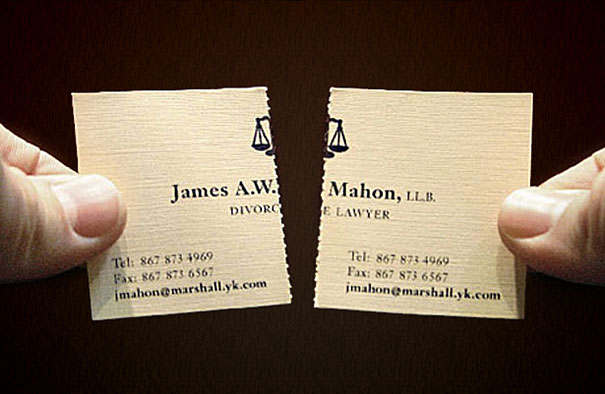
Examples of effective business cards:
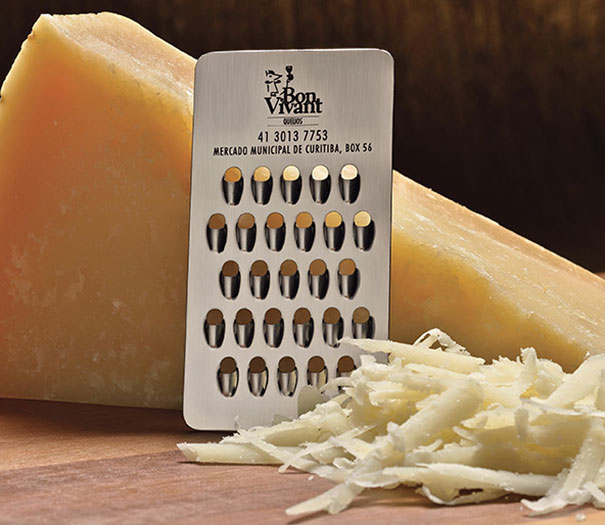
Cheese grater business card.
Advertising agency: JWT, Brazil.

Tearable divorce lawyer business card.


Dentist's cavity business card.
Designed by: Michael Hane and Remo Caminada.

Makeup business card.
Advertising agency: OpusMultipla, Curitiba, Brazil.


Sources used:

Websites:

Thursday, 16 April 2015

Creative Industries - What's happening now?

The UK as a whole currently holds the second biggest design sector in the world, gaining approx £36 billion a year from creative industries such as art, film, music and media - 8% of the UK's GDP coming from these sources. The country's capital, London, was also dubbed the most influential city amongst the creative industry by Forbes magazine, and the country in its entirety is regarded for its influences world wide - even working collaboratively with other countries. Our creative graduates also benefit from our renowned creative industry status and are often exported world wide to move on to bigger and better things within the design industry, an exciting and motivating aspect.

As an aspiring graphic designer myself it is key for me to acknowledge what is happening now within the creative industry. Current trends and popular artists include information which designers should always be kept up to speed on in order to produce quality work which fits into the contemporary standards and gains the interest of the general public.

Some general topics which designers need to know include the seasons colour, top selling contemporary artists, Oscar awards for the likes of best animation, popular artists within the music industry, who won what festival and even food fashion trends. All of these aspects help keep an artist with the times and ensure that their work fits recent standards set by said 'trends'.

The website NOWNESS is a good way to keep up with contemporary culture via film. They release new films each and everyday which "gets under the skin of the most influential names across art and design, fashion and beauty, music, culture and food and travel."

Newcastle.

Newcastle is surprisingly regarded as a creative city which is located just on the banks of the River Tyne in the Tyne & Wear, and with the overall decline of industries such as the wool trade, coal mining and ship building, it has made way for a much more innovative approach to the design industry.

"... Newcastle's economy is thriving with learning, digital technology, retail, tourism and culture all playing a part in its success. What's more, the creative industries are rapidly growing here and the city has plenty to offer the discerning freelance profession who's looking for somewhere to live, work and play."

It is even said to offer some of the best places to set up a secure establishment for design based careers outside of London, allowing some great opportunities for aspiring designers who are more locally based. The thriving atmosphere of this so called creative city also grant access to potential networking, an essential aspect for any designer (new or experienced) and in 2014 it hosted the 'Newcastle Arts Festival'.

It also has its fair share of art museums and exhibitions, including:
  • The Laing Art Gallery, which features paintings from 18th-20th century.
  • The Biscuit Factory, an expansive art, craft and design gallery which I actually paid visit to during a trip in college. It proved to be both inspirational and motivational, one of the most memorable pieces displaying a fair amount of decor flamingos.
  • BALTIC Center for Contemporary Art, a major international gallery and events hub.
And finally, Newcastle even offers unique spaces in which you can work, including Hoults Yard, a friendly office and studio complex which hosts events such as 'Warehouse parties', live music, barbeques, and art exhibitions - making it great for networking too, and the Toffee Factory, a refurbished building which provides both contemporary and high quality office space for digital and creative businesses alike, claimed to be "an inspiring and stunning place to work."


Sources used:

Websites:


  1. https://www.nowness.com/about
  2. http://www.creativeboom.co.uk/travel/creative-cities-newcastle-upon-tyne/
  3. http://www.newcastlefestival.org/
  4. http://www.twmuseums.org.uk/laing-art-gallery.html
  5. http://www.thebiscuitfactory.com/
  6. https://www.balticmill.com/
  7. http://www.houltsyard.co.uk/about/
  8. http://www.toffeefactory.co.uk/

The Truth Is Out There - After Graduation

What area of my discipline do I wish to pursue?

When I first became interested in working creatively for a living I was adamant I would become a freelancer and work happily for myself (see "Where do I see myself" research). However, after completing further research I have become quite daunted by the concept of working alone and have began to carefully consider my options. In my first year at uni I have already tackled an array of tasks including typography, logo design, and even book making, all of which I feel are opening up artistic opportunities for myself, but none of which have truly helped me decide on a particular discipline. I'm still learning and thus still considering which area exactly I desire to pursue.

What transferable skills can I gain from my degree?

In my first year at uni I feel that I have already acquired a vast amount of skills and knowledge which will later help me in an artistic career. These skills include the design of signs, symbols, and logos, typography, posters and books (including their layout) and even animation. I have also gained knowledge of several different softwares (Illustrator, InDesign, Birdfont) and social skills in my attempts to contact both fellow artists and clients. As this is only my first year I can only imagine the abundance of transferable skills I have yet to learn and apply in a future career.

What post graduate courses could I apply for after graduating?

If I so desired I could apply for a post graduate course upon my completion of my course at uni and go on to earn a Masters Degree or even a PhD. Upon researching post graduate courses I could later attend I found a "Communication Design: Graphic Design MA" course based at Kingston University in London.

"This course encourages the exploration and understanding of the methods and processes at work in contemporary visual communication, and will further develop your personal practice and approach to graphic design. It focuses on individual research and enquiry and helps you to develop your understanding of the significance of the wider cultural role of the visual designer. In addition, you will be introduced to disciplinary and interdisciplinary models of thinking that will underpin your own focused study on the course."

The course would even allow me to learn another language. Despite being both interesting and appealing I am unsure as to whether further education after uni is for me. Although I feel this course would be undeniably beneficial I am already benefiting highly from my current course and believe that it may be better to seek employment over further education.

Sources used:

Websites:

http://www.kingston.ac.uk/postgraduate-course/communication-design-graphic-design-ma/

Wednesday, 15 April 2015

Copyright

What is Copyright?

From google definition the term copyright relates to the "exclusive and assignable legal right, given to the originator fro a fixed number of years, to print, publish, perform, film or record literary, artistic or musical material."

The copyright law was was first authorized by Charles II in 1662, during the time of the printing press when the production of books and newspapers allowed them to be easily reproduced/copied. This law prevents any form of original content from being taken and reproduced under the name of anyone who is not the original creator, thus making it incredibly important for everyone in the artistic industry. The law itself is an automatic right, meaning you don't have to physically do anything to ensure your work is copyright protected - the moment you produce any original content (keep in mind this applies only to physical work and not merely ideas) it is yours and yours alone. This particular law not only applies to the artists during their lifetime, either, but also 70 years after their death. A very reassuring factor for any kind of content creator, but one which is often up for debate.

Elements which Copyright protects your work against:

  • The copying of work
  • Distribution of work (free or otherwise)
  • Making an adaption of an original piece
  • Displaying of work on public premises or on the internet 
There have been many cases of Copyright throughout time and some cases involve the well known brand of Primark, which has ironically become well known for its complete disregard of copyright laws - often causing insult with poorly recreated catwalk designs and plagiarized prints.

The company known as Whittards also recently claimed the rights to the well known Alice in Wonderland illustrations by John Tenniel upon the surpassing of the 70th anniversary of his passing. These illustrations have now been reproduced in Whittards name and it's these particular acts which often stir debates and arguments amongst creative producers (as mentioned previously)

Music is also another artistic aspect which is struck with countless copyright laws and the list of artists accused is both long and shocking. One of the most recent cases involving Robin Thicke and Marvin Gaye, other candidates including One Direction, David Bowie and Vanilla Ice.

Tuesday, 20 January 2015

Exhibitons

What are exhibitions?
The word "exhibition" originates from the Latin/late Latin words "exhibere" ('hold out') and "exhibitio" and refers to the public display of artwork or items of interest - most typically held in art galleries of museums. Exhibitions may also be referred to the likes of 'shows', 'presentations', 'demonstrations' or 'spectacles'. The word can also mean "a display or demonstration of a skill" hence why artists most commonly partake in them - to showcase themselves and their abilities.

Exhibitions typically follow a particular theme in which the artist will base their work around, allowing them to publicly display their personal art style and attract both potential clients and buyers. This makes exhibitions an incredibly important part of the design industry structure as it builds up reputation and gets you otherwise acknowledged by a large variety of the public - creating openings for opportunities.

The essentials of exhibitions:
  • Target and know your market effectively
  • Set expectations
  • Price your costs accordingly to these expectations
  • Design the show/exhibition
  • Promote the exhibition
  • Invite guests for private viewings
  • Consider the package as a whole


Permanent galleries:

  • House of Illustration - A registered charity which "is the home for the art of illustration". Opened their doors in the summer of 2014 and displays work by both emerging artists and those already established.
  • The Illustration Cupboard - A unique art gallery located in central London which recognizes contemporary book illustrators from around the globe. Has organized events such as artist's exhibitions, themed events and even national festivals since 1995.
  • Beach London - A gallery/creative agency which works with a broad range of commercial creatives. They partake in a productive range of projects, exhibitions and events and have also been known to combine the three. Clients include the likes of ASOS, Topman and MTV.
  • Kemistry - An independent design gallery founded in 2004. It is dedicated to exhibiting the work of past, present and upcoming designers and aims to make design available to audiences who may overlook/undervalue it's importance when compared to fine art and photography.

National Exhibitions:
  • Serco Prize - Based in London's Transport Museum and invites illustrators to create pieces of work which revolve around the theme of London. The theme for 2015 is "London Places and Spaces" and the aim of the competition is to bring forth artwork which is colourful and inspiring for display.
  • Grafik Magazine - "A home for the world's most inspiring graphic design". Based in a London office, they "report on the latest projects by both upcoming and established design talent around the world, explore graphic design history, represent the ideas of design practitioners, and provide a forum for thinking and writing about graphic design".
Outdoor Indoor Walls:
  • Hoults Yard - An office and studio complex situated in Newcastle with a modern but vibrant twist. Holds events such as 'Warehouse parties', live music, barbeques, and art exhibitions. 
  • Artist Hotel Brighton - Located in the historic Regency Square, this eccentric hotel holds twenty three rooms each filled with individual artwork. It offers a sea view of the West Pier, a chilled out atmosphere, and some general "down to earth hospitality" in which you can relax and enjoy the "reclaimed vintage style".

Festivals:
  • Pick Me Up - Onto its 6th festival, Pick Me Up is the UK's original graphic arts festival which focuses on the likes of contemporary graphic art, design and illustration.
  • London Illustration Fair - Established in 2013 it's "London's freshest artist-led illustration, print and design fair" and allows emerging talent to be brought into the lime-light by displaying it in an environment filled with illustration lovers.
  • Illustrative Berlin - Has become a worldwide renowned art festival since it's beginning in 2006 and is known as the "leading international festival for contemporary illustration and graphic arts". The whole concept behind this festival is to display the entirety of international illustration and graphic art in one singular exhibition.
  • Design Event - Established in 2005, it both supports and promotes designers across the Northern region (especially graduates and those less established) and provides regional/national platforms to showcase design work of a high quality. 
  • London Design Festival - An annual event which was first held in 2003. It's composed of over three hundred and fifty events/exhibitions and is held in order to promote the idea that London is the design capital of the world. {Watch a video on it here}

Case Studies:
  • Stefan Sagmeister | The Happy Show - This particular installation covers the entire second-floor (and ramp) of the Institute of Contemporary Art, offering "visitors the experience of walking into Stefan Sagmeister's mind as he attempts to increase his happiness via mediation, cognitive therapy, and mood-altering pharmaceuticals".
  • Tove Jannsson | Ateneum Art Museum - As a celebration of the 100th anniversary since Jannsson's birth, the Ateneum showcased decades worth of work from her "impressive career as an artist, illustrator, political caricaturist, author, and creator of the Moomin characters and stories". The exhibition covered all the periods of her productive career and included loaned pieces of work from Finnish museums.
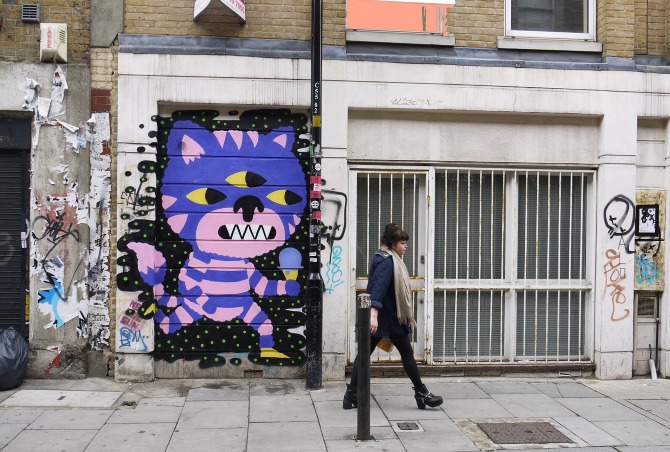
  • Malarky - A street painter and illustrator known for sprucing up the grey and drab London streets with vivid and colourful works of art, using buildings, trucks and many other raw street materials as a canvas.


Sources used:

Websites:
  1. https://www.houseofillustration.org.uk/about/who-we-are
  2. http://www.illustrationcupboard.com/aboutgallery.aspx
  3. http://beach.london/about
  4. http://kemistrygallery.co.uk/about/
  5. http://www.theaoi.com/events/
  6. https://www.facebook.com/grafikmagazine/info?tab=page_info
  7. http://www.houltsyard.co.uk/about/
  8. http://artistresidencebrighton.co.uk/about-us/
  9. http://pickmeuplondon.com/index/about/
  10. http://www.thelondonillustrationfair.co.uk/about-us/
  11. http://www.illustrative.de/festival/about/
  12. http://www.design-event.co.uk/AboutUs.php
  13. http://www.londondesignfestival.com/about
  14. http://www.sagmeisterwalsh.com/work/project/the-happy-show/
  15. http://www.ateneum.fi/en/tove-jansson
  16. http://www.malarko.com/ABOUT