Thursday, 18 December 2014

Frances Moffatt

Frances Moffatt is both an author and a freelance fashion illustrator based in the North East, and after achieving a BA Hons in fashion marketing she admirably built up her reputation through use of promotional packaging and the creation of her own personal website. This not only secured her work with companies such as Lullaby and Go Girl magazine, but also got her acknowledged by Bright Agency. One of her most successful and recognized pieces is an illustrative exercise book titled "The Fashion Exercise Book" which she worked on with a company named Batsford. This book has been featured in stores such as Waterstones and TK Maxx, and has even been displayed in galleries such as the Tate and the Baltic.


With regards to her style, it appears to follow the typical 'fashion illustrator' vibe. Her use of line suggests the detail and depth within the image, and a splash of colour or a specific pattern is used to further enhance her pieces. Despite using no tone or shadow, she still maintains a sense of realism within her designs and overall has a very has a very sophisticated style of illustration.

The Pitch - Other Printing Techniques

Lino Printing:

Lino printing (or lino cutting) is a 'block' printing technique and is considered to be one of the simplest forms of printing. The process, like any other, begins with the choice of a design. A mirror image of the chosen design is them produced onto the lino block either through tracing the original image or sketching it freehand. The areas of the design which aren't to be physically printed are then carved from the block and once this is finished the block is inked with a roller and printed onto your material base of choice (this is usually done manually but a printing press can also be used).

Examples of lino prints:
Mono printing:

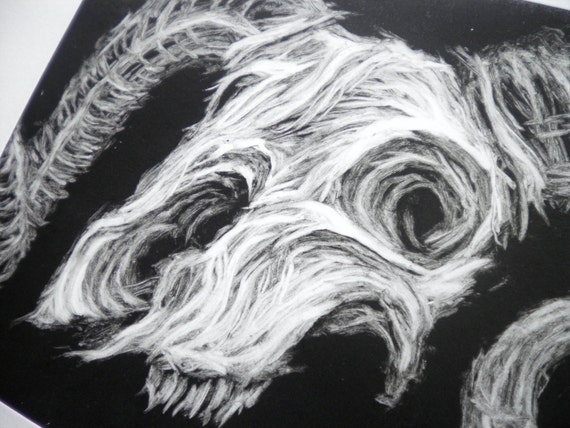
Mono printing is appraised as a very versatile form of printing as it allows the artist to work positively or negatively, with water-based or oil based inks, and even gives the opportunity to mix materials. In order to create a monoprint/monotype you will require a plate of any type (so long as it is non-porous) and ink. A variety of tools can be used to paint your plate (such as paintbrushes, sponges, your fingers, and even sharp objects such as needles of scissors) which will create a wide range of effects. Once your image is painted, the printing process is completed by placing the plate onto a press bed and carefully placing your dampened material of choice over the top of it, running it through the press and applying pressure to produce your print.

Examples of mono prints:

"Abuela"

"Rams Skull"
Lithography:

Lithography is used heavily for commercial print as it can mass print copies of the same design in one production run. Lithography machines rely on four basic colours, cyan, magenta, yellow and black, and can print on both sides of any paper/card. The process involves a printing plate which has the image to be printed on its surface. This plate is kept dampened and ink is placed onto it. The printing cylinder then rotates and transfers the ink onto the rubber blanket cylinder, which is then pressed onto the base material (paper or card) and pulled through the machine. 

Examples of lithography:

"Storm"
Risograph printing:

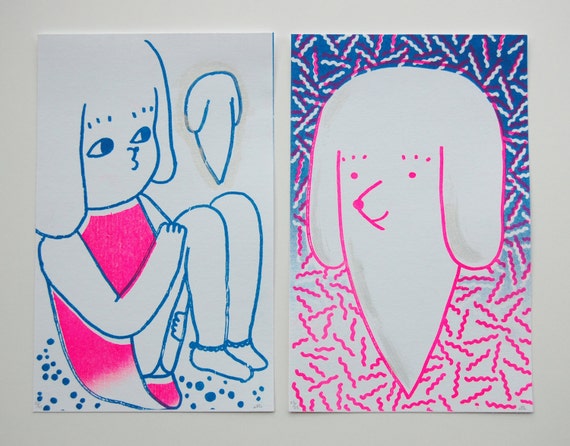
Risograph printing is basically a printing machine which is borderline between photocopying and screen printing. It can be used to print multi-coloured designs, however, like screen printing, it can only print one singular colour at a time. The risograph machine works by printing your image directly from a computer or from the scanning table located on the top of the machine (hence why it's similar to a photocopier). The image gets transfixed onto a 'master sheet' which wraps around a colour drum in the center of the machine, and a 'master copy' acts as a screen for which the ink is pressed through and onto the paper - creating your print. The paper is sent through the printer multiple times if the design incorporates more than one colour.

Examples of risograph printing:

 
"The Apparition of Ghost Dog"
Viktor Hachmang
Woodblock:

Woodblock printing requires very few tools and the piece of wood used can vary in size, making it convenient to do in work spaces such as your own home. There are typically two ways in which you can relief print with wood - "woodcut" and "woodblock". Woodcut involves cutting along the grain of the wood, incorporating the texture of the wood into your final print, whereas woodblock uses a more compact grained wood which allows you to carve designs more freely. The process of woodblock printing begins with sketching the design onto you block, which is then carved into and then inked with a roller (a lot like lino printing). Once inked the design can be printed onto your base material.

Examples of woodblock:

"Window"
Ichijô Narumi

Sources used:
Websites:
  1. http://www.howtolinoprint.com/
  2. http://www.monoprints.com/about_monoprints.php
  3. http://www.technologystudent.com/designpro/prtpro5.htm
  4. http://www.peowstudio.com/print/
  5. http://www.instructables.com/id/Creating-cutting-and-printing-your-own-woodblock/?ALLSTEPS


Wednesday, 17 December 2014

The Pitch - Screen printing

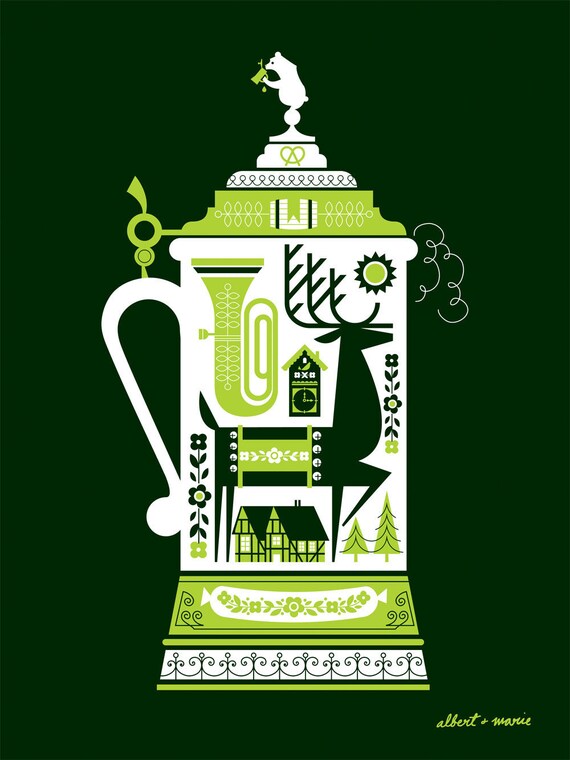
Screen printing is an incredibly versatile form of printing as it can be used to print on a wide range of materials such as paper, paperboard, plastics, glass, metals, and fabrics including nylon and cotton. Commonly seen products produced through screen printing include the likes of posters, labels, decals, signage and all types of textiles.

Screen printed designs:

"DeerStein"
"Bernie's Burger Bus Ketchup"
The advantage of screen printing over other forms of printing is that the press can print on substrates of any shape, thickness and size. A significant aspect to this process is the amount of excess ink which can be applied to the base material, which exceeds the general amount able to be applied with any other printing process. This allows the creation of some interesting effects, and because of the simplicity behind this particular process a wider range of inks and dyes can be used.

Screen printing consists of three elements: the screen, the squeegee, and the ink. A porous mesh is stretched tightly over a wooden or metal frame and a stencil is produced onto this 'screen' either manually or photo-chemically. Once the stencil is produced it's placed over the chosen material base and, depending on the effect desired, a certain thickness of ink is layered over the screen. The ink is then forced through the open areas of the screen (where no stencil is applied) by applying pressure with the squeegee and the image is formed on the base material beneath the screen. Many factors play a role in the quality of the screen print produced, such as the composition, size, angle and even the speed at which the squeegee is drawn across the screen.

An average price for a 1 colour print on a 100% cotton t-shirt ranges from £3 to £5. However, the price can rise considerably if additional colours are added to the design (Each colour requires a separate screen).

Companies which specialize in screen printing:
{ PEOPLE OF PRINT: "20 screen print artists you should all know about" }


Sources used:

Websites:
  1. http://pneac.org/printprocesses/screen/

The Consumer

The term "consumer" relates to a person who purchases items and/or services for their personal use. They may also be referred to as customers, clients, or even just 'the public'. "Consumers" are the people at the end of the production line - the main focus during the creation of any product. As a graphics design student interested specifically in the advertisement aspect of design, my job will involve catering to many, if not all, of the general public. I will have to create designs which will appeal to a large variety of demographics, and these designs will be essential to selling products.

Who are you?

As I consumer I don't necessarily have a 'set' style when it comes to purchases, and I prefer more-so to take different elements from specific styles and mesh them together - allowing me to create my own distinct 'style'. This creates the opportunity for me to purchase a larger range of things and to have a more personal taste.

What do you buy?

My most typical buys involve books and clothes. When it comes to books I definitely judge by it's cover. I like covers with intricate designs, the kind that not only look pretty but also seem to allude to the story - especially if it's in a confusing way. The more questions I need ask, the more likely I am to buy. With regards to clothes I always find that I'm torn between a mixture of styles, but I tend to go with a more vintage style, taking an "old is new" approach to what I wear. Overall I think I definitely have a tendency to go for things which appear timely or unusual, but remain aesthetically pleasing as this makes them appear quirky, and I'm always on the look out for how past styles can influence the more contemporary styles of today.

What demographic are you?

Although I do go for more timely designs, I believe I still stand in the "young adult" category as a consumer. This is mostly due to the fact that when I gain inspiration for a new outfit, or purchase a new product in general, my main influences come from seeing people my age with said product.

How are you targeted?

I think I'm targeted through several different means. Firstly, there's the generic advertisements you see everywhere in day to day life, whether it's on tv, in a magazine, or on the radio. I also find that my attention is regularly captured by window displays at the front of shops, which are catered to a wide range of the general public, and once I've spotted something I almost always end up going inside for a better look. Mostly, though, I feel that I am targeted via social media. I spend a lot of time on my phone and am thus a heavy user of apps such as Instagram and Pinterest, both of which I use for inspiration with regards to many different things (clothes, artwork, recipes), and even Facebook, which displays advertisements catered to what I've ran through google search - making the products advertised more personal and appealing to my individual taste.


What sets you apart from the general public?

My personal taste, just like anybody else's would set them apart from me. As a mass we can like the same, generic things, but personal taste is what makes us all differ. Each and every member of the general public will have a refined personal taste, for example two different people may like the style of a certain blouse, but one may prefer the floral pattern whereas the other's preference lies with the plain one. Each liked the general style of the blouse, but personal taste allowed them to be set apart from each other.

Sean Sims

Sean Sims is an illustrator/graphic design artist based in Brighton but originally from Teeside. After previously attending Cleveland College of Art and Design, Sims went on to gain clients such as the BBC, The Guardian, The Sunday Times, Virgin and Vodafone.

One of this most successful pieces is his own personal take on the London underground map, titled: "The Brighton Line".

He is, however, also know for his colourful, child-like illustrations which are both fun and quirky:


He typically works in a program called Illustrator and his playful designs are composed of both basic shapes and basic colours, despite this simplicity though they still remain detailed and have a sense of fun surrounding them. The simplicity behind his designs also allows them to be used in a wide variety of different products, and it has in fact secured him work within different parts of the design industry - such as publishing and even greetings cards.

Sources used:

Websites:
  1. http://www.artrepublic.com/biographies/265-sean-sims.html
  2. http://www.artrepublic.com/artists/780-sean-sims.html
  3. http://seansimsillustration.blogspot.co.uk/


Tuesday, 16 December 2014

Publishing

Publishing, or to publish, is the occupation of preparing/issuing material (such as books and journals) for sale. The word originated from the Latin words "publicus"/"publicare" ('make public') which later became "puplier" in old French, until eventually becoming "publish" in middle English, meaning 'make generally known'.

In the UK there are approximately 150,000 people employed within the publishing industry and it has a number of different areas which you can work in, such as book publishing, computer game publishing, journals, zines, magazine or newspaper publishing, and even software publishing. Different stages of the publishing process include creation and design, distribution and retail, and production.

The book publishing industry in particular is popular for graphic designers and illustrators alike as the art of book covers is often what gets the book itself noticed, not only making it incredibly important to the author but also giving a great window of opportunity for you to have your work noticed by the general public.
Designing a book cover is no east task, however, as it requires a number of different things. Firstly, you would have to commit to a very close reading of the book itself. This allows you to understand what you're designing, and in acknowledging the smaller details of the product gives easier inspiration for obscurities you could relate your design to. Collaboration with the author is also essential, after all it's their work and they're going to have their own ideas regarding what the cover could allude to, so you always have to be open to what they have in mind. Testing out different medias and development of ideas is also something which is very important when designing a book cover, it needs to be interesting enough to capture the attention of the public, and sometimes that requires stepping out of your comfort zone and trying out new things.

One particular book publishing industry is Bloomsbury. They are a "leading independent publishing house established in 1986" and they companies based around the globe, including: London, New York, Sydney and Delhi. The four divisions of this publishing company are Academic and Professional, Information, Adult Publishing, and Children's Publishing. Chris Priestley is an author who works within this publishing company and I own several of his novels, one being The Dead of Winter.


The cover was designed by Priestley himself as he is also an artist, and the overall design is very prominent. Through use of cold tones we have a simple but effective representation of winter, and the striking image of the skull makes for a startling design. Both of these aspects relate heavily to the title and also suggest events which later take place in the novel.


One distinct detail on this cover is the textured shimmer which disperses out and around from the skull, giving the effect of frost and helping to further enhance the design as it not only captures the light, but the attention of potential readers too.

Sources used:

Websites:
  1. http://www.prospects.ac.uk/media_publishing_sector_overview.htm
  2. http://www.bloomsbury.com/uk/company/about-us/

Where I see myself & different agencies

Where do I see myself?

Personally, I typically see myself going down the freelance route. The creative freedom of this particular path really appeals to me and I think in being open to different contracts and companies will allow me to explore and apply myself creatively to different briefs, giving me the chance to expand further as a designer/illustrator. The concept of being my own boss is something which I believe I could handle as well, and since being creative is something I thoroughly enjoy I don't view self-motivation as something I would struggle with.

I do understand, however, that freelancing comes with it's own disadvantages compared with what I would face if I was employed/worked for an agency, such as the lack of security, or the fact there's no guarantee of another contract when my current one ends. Although many of the pitfalls which come with freelancing seem daunting I somewhat believe that facing them would provide a valuable lesson and a better understanding on where I want to be in this industry, better preparing me for anything design related I wish to tackle in the future.

With that being said, however, I still feel that being employed by an agency or being part of a design-house would be a good experience, and I can see myself willing to try out these routes also - even if my preference is freelance. I need to be open to different opportunities in the event that perhaps freelance isn't right for me, even if I feel so strongly about it at present moment.

How do I want to be represented?

Presumably, since my preference is freelance, I would represent myself.

How do I want to be perceived by the market?

I would want to be perceived as a definite hard worker, able to keep my head down and work to my full capacity for any brief. I think it would be a good aspect to show my independence and my ability to work as a one-man team, but to also show my capability of working amongst others - as I know I'll have to take on constructive criticism from clients who hire me and have their own valued ideas. Since I'd be selling myself and my work it'd be important to be perceived as an individual with a small variety of styles which help define my persona as a designer/illustrator.

How do I want to win commissions?

As I aspire to go down the freelancing route I think it'd be important to win commissions through showing originality and an individual style, allowing me to stand out from any competitors and gain potential clients. Word of mouth and a good reputation would also be a good way to win commissions, however this is something I would have to build up and work incredibly hard for - but it's definitely something to strive towards.

Examples of freelancing artists:

  • Fran Meneses - Fran, or 'Frannerd', is an illustrator situated in Berlin.
  • Teagan White - Teagan White is a freelance designer/illustrator who lives and works in Minnesota.
  • Rebecca Green - Rebecca Green is a Denver based freelance illustrator who originally grew up in Michigan.
Agencies/Design Houses:
  • Nobrow - A publishing company "with the aim to provide an independent platform for graphic art, illustration and art comics in the UK and abroad".
  • Début Art - An agency for illustrators and artists aiming to promote "the world's finest leading visual communications artists".
  • Dirty Hands Co - "A creative design studio based in Newcastle England, born from the desire to create unique, vibrant imagery across whatever we can get our hands on."
  • ILOVEDUST - "A multi-disciplinary studio" who focus on creating "fresh, innovative design".